The Last Supper Machine Embroidery
First Impressions: A Minimalist Design with Visual Impact
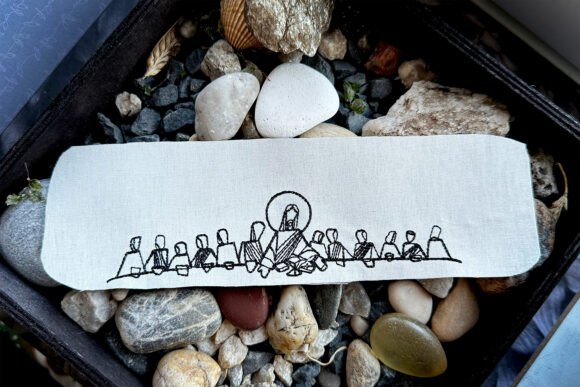
As an embroidery designer evaluating The Last Supper Machine Embroidery, the first thing that stands out is its minimalist aesthetic. The one-line, simplified interpretation gives it a rustic, almost hand-drawn quality that feels both modern and timeless. It’s not overly decorative, which makes it versatile for small businesses looking to add a unique, artistic touch to their merchandise without overwhelming the design space.
It strikes a balance between bold and subtle—ideal for businesses that want to convey professionalism while maintaining a sense of approachability. Whether used as a chest logo, sleeve accent, or embroidered patch, this design has the potential to elevate brand identity with its clean lines and thoughtful composition.
Real-World Business Applications: From Patches to Product Packaging
The Last Supper Machine Embroidery is well-suited for a variety of commercial embroidery applications. For small business owners and Etsy sellers, this design can be repurposed across multiple branded items:
- Embroidered patches – The minimalist style translates well into sew-on or iron-on patches, perfect for clothing labels or limited-edition merchandise.
- Staff uniforms and aprons – It offers a unique alternative to standard logos, especially for boutique cafes, artisan bakeries, or creative studios wanting to showcase a curated aesthetic.
- Cap embroidery – Due to its linear nature, it can work on curved cap fronts, provided the size is adjusted appropriately.
- Tote bag design – As a focal point on tote bags, it adds a refined, artistic flair that appeals to customers looking for handmade or thoughtfully designed products.
- Product packaging accents – For handmade brands, embroidered tags or fabric labels using this design can elevate packaging and create a memorable unboxing experience.
This machine embroidery design also lends itself well to printable mockups, allowing businesses to visualize how it will look on various products before production. Whether used for event merch, customer gifts, or craft business assets, it offers flexibility and visual interest.
Where to Use It Carefully: Fabric, Size, and Placement Considerations
While The Last Supper Machine Embroidery is visually compelling, there are practical considerations to keep in mind when applying it to business merchandise:
- Small patch sizes – The design may lose clarity if scaled too small. Test it at patch sizes under 2 inches to ensure details remain visible.
- Cap fronts and curved surfaces – Ensure the hoop size and stitch density allow for even coverage on curved areas to avoid distortion.
- Textured fabric – Rough or uneven fabrics may affect the stitch definition. Use a proper stabilizer to maintain clarity.
- Dark uniforms – The simplified design may not stand out enough on dark backgrounds without high-contrast thread colors.
- High stitch density – If the file has dense stitching, it could lead to stiffness or puckering on delicate fabrics like cotton blends or lightweight denim.
As with any digital embroidery file, always test on a sample fabric before committing to full production runs.
Brand Identity and Customer Perception
Using The Last Supper Machine Embroidery as part of your small business merch strategy can influence brand perception in several ways:
- Brand identity – Its unique, almost primitive style sets it apart from typical logos, giving your brand a more curated, artisanal feel.
- Customer trust – High-quality embroidery signals attention to detail, which can enhance perceived professionalism and care in your product offerings.
- Recognition – The distinct imagery can become a memorable visual signature, especially for niche or seasonal collections.
- Product value – Adding embroidered elements elevates even basic items like tote bags or aprons, making them feel premium.
- Visual consistency – If used across multiple items (caps, aprons, packaging), it reinforces a cohesive brand look.
- Handmade presentation – The design’s simplicity complements small-batch or craft-focused branding, appealing to customers who value authenticity.
Designer Notes: Practical Tips Before Production
Before incorporating The Last Supper Machine Embroidery into your commercial embroidery projects, consider the following:
- Test in black and white first – This helps assess contrast and detail without color distractions.
- Check patch size compatibility – Ensure the design holds up at intended dimensions, especially for small labels or tags.
- Review thread color contrast – Especially on dark or textured materials, the right thread choice can make or break the design’s visibility.
- Inspect spacing and outlines – Since it’s a single-line design, spacing issues or broken lines could affect legibility.
- Confirm hoop size – Make sure your embroidery machine can accommodate the file’s dimensions without distortion.
- Test on real fabric – Always run a sample on the actual material to evaluate stitch performance and appearance.
- Use proper stabilizer – A medium-weight tear-away or cut-away stabilizer will help maintain stitch quality on different fabric types.
- Create a mockup for client approval – Especially useful if you're working with boutique clients or custom apparel orders.
- Compare with other design assets – Ensure it aligns visually with your existing logos, fonts, and branding elements.
- Confirm commercial licensing – Always verify that the embroidery file is licensed for business use to avoid legal issues.
Final Thoughts: A Thoughtful Addition to Your Embroidery Portfolio
The Last Supper Machine Embroidery is more than just a decorative piece—it’s a versatile design asset that can enhance custom apparel, branded product labels, and small business merch with its clean, artistic appeal. Whether you're an embroidery shop, a handmade brand, or a merch creator, this design offers a unique opportunity to differentiate your offerings with a touch of visual storytelling.
Used thoughtfully and applied with attention to fabric, size, and color, it can become a signature element of your brand’s visual identity. Just remember to test thoroughly, plan for real-world wear, and ensure licensing is in order before production.